Mustard Roasted Potatoes are the side dish you didn’t know your Sunday roast was missing. There is something truly magical that happens when the sharp, vinegary tang of whole grain mustard meets the creamy, buttery interior of a perfectly roasted baby gold potato. This isn’t just another tray of spuds; this is a culinary experience designed to hit every sensory note, from the audible crunch of blistered potato skins to the glossy, peppery finish of a melted butter coating.
If you have been searching for a way to elevate your weeknight dinners, these Mustard Roasted Potatoes provide the perfect solution. They are sophisticated enough for a holiday table yet simple enough to prep in under ten minutes. The combination of high-heat roasting and a signature mustard emulsion creates a texture that is both rustic and refined, making them a viral favorite on Pinterest for a reason.
Why These Are the Best Mustard Roasted Potatoes You Will Ever Make
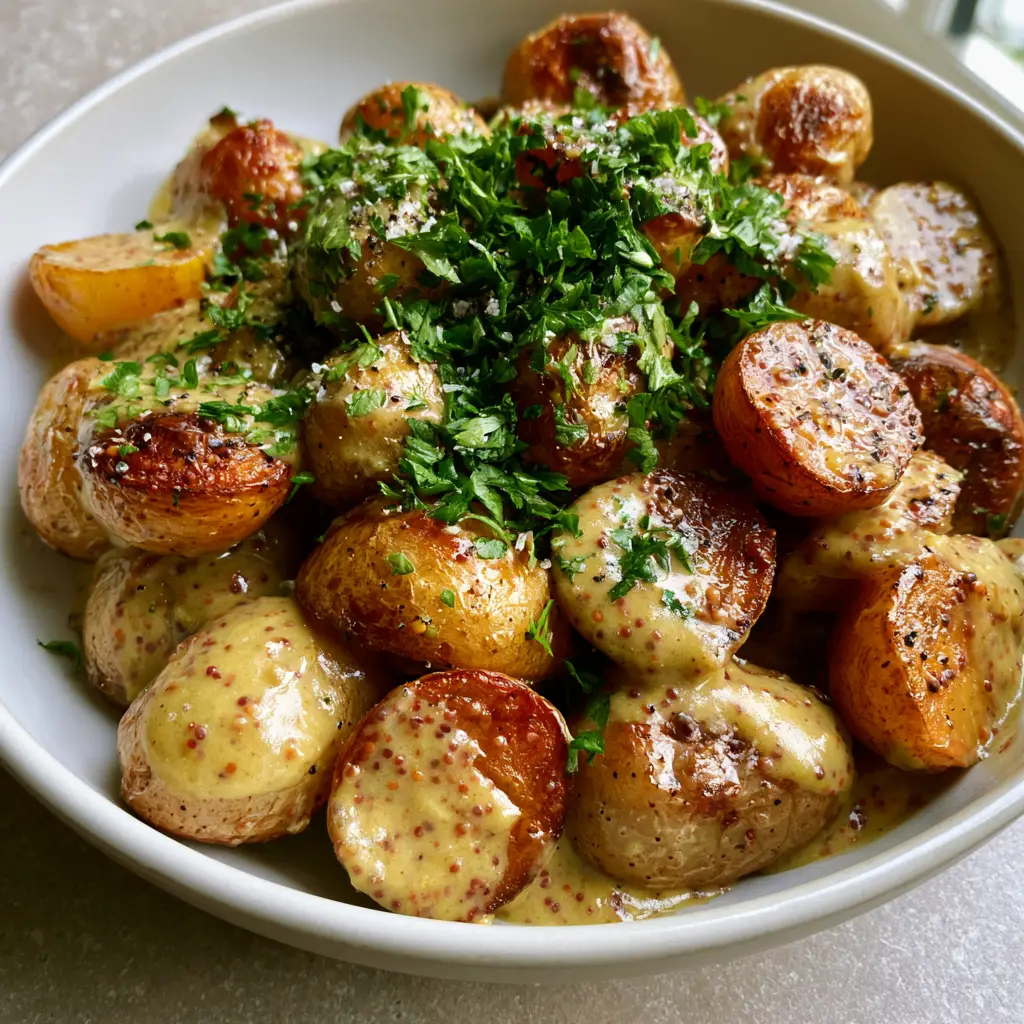
- The Blister Factor: We use a specific high-heat technique to ensure the skins pull away slightly and char, creating those coveted blistered potato skins.
- Glossy Mustard Glaze: By emulsifying whole grain mustard with melted butter, we achieve a thick, glossy, pale yellow mustard glaze that clings to every nook and cranny.
- Dual-Texture Spuds: Using a mix of whole and halved baby gold potatoes provides a variety of textures, from creamy centers to ultra-crispy edges.
- Visual Appeal: The contrast of bright green parsley and coarse cracked black pepper against the golden potatoes makes this dish a centerpiece in its own right.
Essential Ingredients for the Perfect Golden Roast
To achieve the specific look and taste of these Mustard Roasted Potatoes, every ingredient serves a technical purpose. Do not skip the quality of the mustard here!
Baby Gold Potatoes: You will need 2 lbs (907g) of baby gold potatoes. Their thin skins are essential for blistering, and their waxy flesh holds its shape during the tossing process.
Whole Grain Mustard: This provides the “speckled” look and a deep, fermented tang. We use 3 tbsp (45ml) to ensure the glossy whole grain mustard glaze is prominent.
Unsalted Butter: 4 tbsp (56g) of melted butter acts as the carrier for the mustard, providing that rich, mouth-coating fat that oil alone cannot replicate.
Extra Virgin Olive Oil: Used during the initial roast to help the potatoes reach the high temperature needed for skin blistering without burning the butter solids.
Fresh Italian Parsley: A heavy garnish of 1/4 cup (10g) finely chopped parsley adds the necessary herbacious lift to cut through the richness of the butter.
Cracked Black Pepper & Kosher Salt: Coarse pepper is vital for the visual “pop” and the bite that complements the mustard seeds.
The Science of the Blistered Potato Skin
Achieving blistered potato skins isn’t about luck; it is about thermodynamics. When the high heat of the oven (400°F / 200°C) hits the moisture in the potato skin, it causes the skin to expand and separate slightly from the flesh.
This creates a pocket of hot air, resulting in that shattered-glass texture. If you love crispy textures, you might also enjoy our jalapeno smashed potatoes, which utilize a similar surface-area-to-volume ratio for maximum crunch.
How to Make Mustard Roasted Potatoes Step-by-Step
1. Preparing the Spuds
Start by washing your baby gold potatoes thoroughly. Pat them bone-dry with a kitchen towel; moisture is the enemy of the blistered potato skins we are aiming for. Leave the smaller ones whole and halve the larger ones to create visual variety and different roasting surfaces.
2. The Initial High-Heat Roast
Toss the potatoes in a large bowl with olive oil, salt, and half of the cracked pepper. Spread them out on a preheated baking sheet. Space is key. If the potatoes are crowded, they will steam instead of roast. Roast at 400°F (200°C) for 25-30 minutes until the edges show slightly charred edges and the skins look taught and bubbly.
3. Emulsifying the Glossy Mustard Glaze
While the potatoes roast, whisk together your melted butter and whole grain mustard. You are looking for a pale yellow mustard glaze that is thick and emulsified. If the butter starts to separate, give it a vigorous whisk right before the potatoes come out of the oven.
4. The Final Toss and Finish
Remove the tray from the oven. While the potatoes are screaming hot, pour the mustard-butter mixture over them. Use a metal spatula to toss them directly on the tray. The residual heat will cook the mustard just enough to take away the raw harshness while keeping the glossy melted butter coating intact.
5. The Signature Garnish
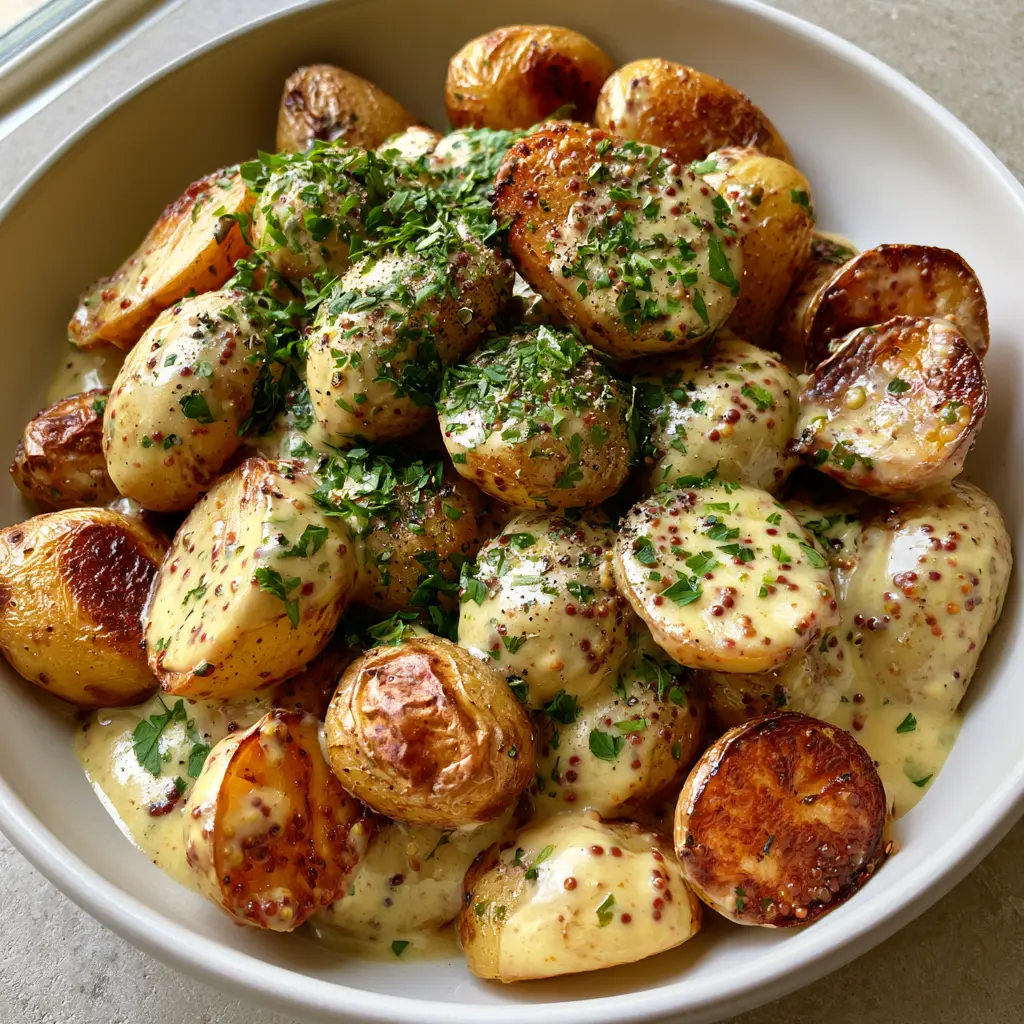
Transfer the potatoes to a shallow white ceramic bowl. This is where you add the “Pinterest flair.” Sprinkle the remaining cracked black pepper and a heavy garnish of finely chopped fresh green parsley. The green against the yellow mustard seeds is what makes this dish look professional.
Expert Tips for Success
- Preheat the Pan: Place your baking sheet in the oven while it preheats. Dropping the potatoes onto a hot surface guarantees an immediate sear on the cut sides.
- Dry the Potatoes: Any water left on the surface will create steam, preventing the Mustard Roasted Potatoes from getting those crispy, charred edges.
- Mustard Quality: Use a high-quality Dijon-style whole grain mustard. The vinegar content helps balance the heavy butter coating.
- Don’t Over-mix: When tossing the finished potatoes in the glaze, be gentle. You want the skins to stay intact and blistered, not mashed.
What to Serve With Mustard Roasted Potatoes
These potatoes are incredibly versatile. The acidity of the mustard makes them a perfect partner for rich meats. We highly recommend pairing them with a hamburger steak with brown gravy for a comforting meal.
If you are looking for a full vegetable spread, they sit beautifully next to our roasted brussels sprouts. The textures complement each other perfectly, providing a varied and healthy plate.
Storage, Reheating, and Freezing
To Store: Keep leftovers in an airtight container in the refrigerator for up to 4 days. Note that the glossy whole grain mustard glaze will thicken and lose its shine when cold, but the flavor remains excellent.
To Reheat: For the best results, avoid the microwave. Reheat in a 350°F (175°C) oven or an air fryer for 5-7 minutes. This will revive the blistered potato skins and melt the butter coating back to its original glory.
To Freeze: We do not recommend freezing roasted potatoes, as the cellular structure of the potato changes, often resulting in a mealy texture upon thawing.
Absolutely. Air fry at 400°F (200°C) for 15-20 minutes, shaking halfway through, then toss with the mustard glaze immediately after they finish cooking.
Yes, you can use Dijon mustard, but you will lose the distinct ‘speckled’ look and the slight pop of texture provided by the whole mustard seeds.
The secret is high heat (400°F/200°C) and ensuring the potatoes are completely dry before roasting. Crowding the pan will cause them to steam, which prevents blistering.
No! The skins are essential for the texture of Mustard Roasted Potatoes. Baby gold potatoes have very thin, delicate skins that become crispy and delicious when roasted.
The Ultimate Mustard Roasted Potatoes Recipe
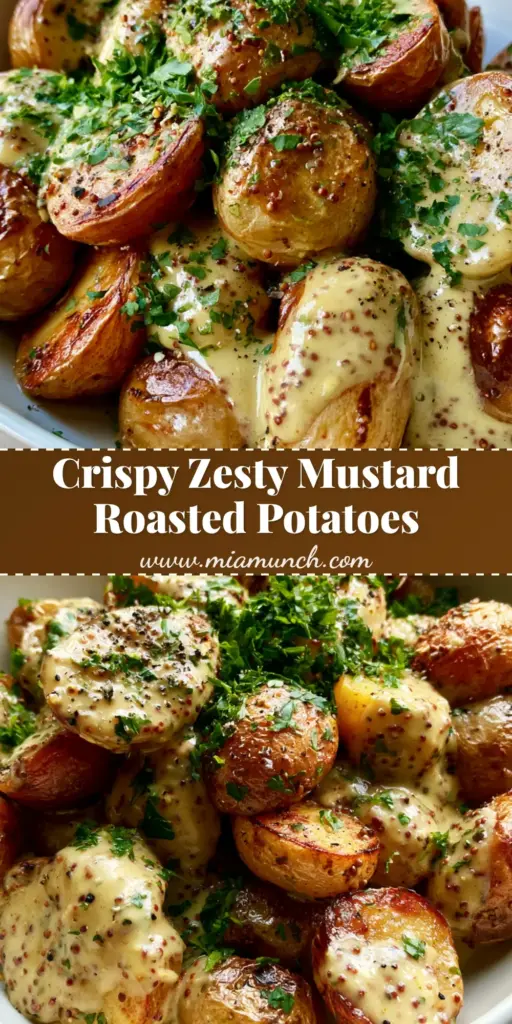
Mustard Roasted Potatoes with Blistered Skins and Whole Grain Glaze
Ingredients
Equipment
Method
- Preheat your oven to 400°F (200°C). Wash and pat the baby gold potatoes completely dry. Halve the larger potatoes, leaving small ones whole.
- Toss potatoes with olive oil, salt, and half the pepper. Spread on a baking sheet and roast for 25-30 minutes until skins are blistered and edges are charred.
- In a small bowl, whisk together the melted butter and whole grain mustard until a glossy, pale yellow emulsion forms.
- Pour the glaze over the hot potatoes and toss to coat. Serve in a bowl topped with remaining pepper and fresh parsley.
Notes
Do not crowd the pan; use two sheets if necessary to ensure crispy edges.
Save This Recipe for Later!
Did you love these Mustard Roasted Potatoes? Make sure to save this to your Side Dish board on Pinterest so you never lose it! If you made these, we want to see them. Tag mia_munch or upload a photo of your blistered potatoes in the comments below. Don’t forget to leave a 5-star rating if this is your new favorite way to eat spuds!