Mastering an authentic Miso Soup Recipe at home is the ultimate culinary shortcut to a soul-warming, umami-rich experience. This recipe delivers a stunning, cloudy golden-brown savory dashi broth that rivals your favorite high-end sushi restaurant. By focusing on the delicate balance of fermented paste and mineral-rich seaweed, you can create a bowl that is as visually striking as it is delicious.
Whether you are looking for a light starter or a comforting midnight snack, this Miso Soup Recipe provides the perfect foundation. Much like my homemade-ramen-recipe, this soup relies on a high-quality broth to carry the clean flavors of silken tofu and fresh scallions. The result is a vibrant, restaurant-quality dish that you can whip up in less than 20 minutes.
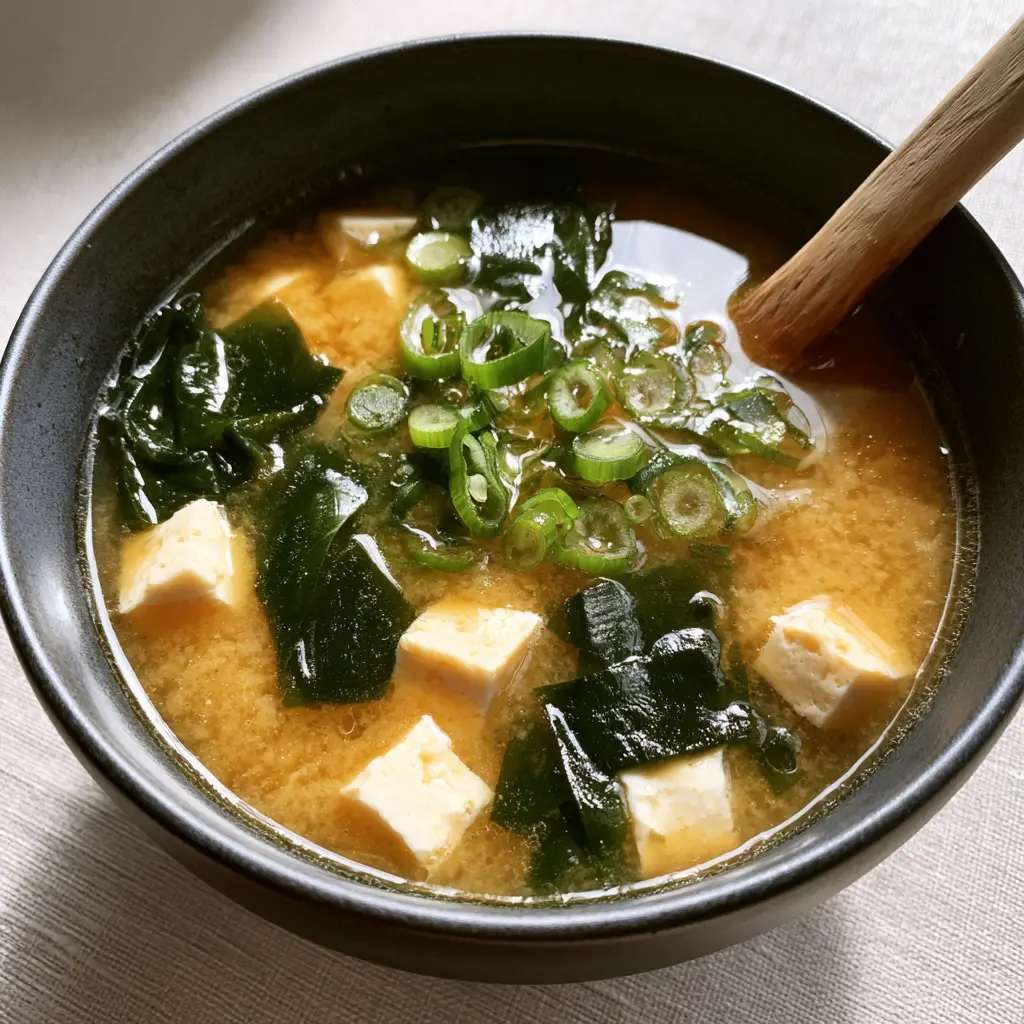
Why This Miso Soup Recipe Works Every Single Time
- Visual Perfection: The contrast of dark green wakame against the golden-brown broth and stark white tofu cubes is a feast for the eyes.
- Texture Balance: We use smooth silken tofu that melts in your mouth, paired with the slight snap of rehydrated wakame seaweed.
- Umami Depth: By using a traditional dashi base, we achieve that deep, savory “fifth taste” that defines Japanese cuisine.
- Quick & Nutritious: A probiotic-rich meal that fits perfectly into a busy weeknight schedule or as a side for roasted-brussels-sprouts.
The Anatomy of a Perfect Golden-Brown Dashi Broth
The secret to a world-class Miso Soup Recipe lies in the dashi. Dashi is the “mother stock” of Japan, typically made from kombu (dried kelp) and katsuobushi (dried bonito flakes). This creates the golden-brown foundation seen in our visuals.
Miso Paste: For that specific golden hue, I recommend an “Awase” miso (a blend of white and red) or a light yellow miso. White miso (Shiro) is sweeter and milder, while Red miso (Aka) is saltier and more fermented.
Silken Tofu: Do not use firm or extra-firm tofu here. You want the “soft” or “silken” variety. These uniform white cubes should be handled gently so they don’t break apart before serving.
Wakame Seaweed: These dark green ribbons start as small, dried curls and expand beautifully once they hit the warm liquid. They provide a gentle oceanic flavor that balances the saltiness of the miso.
Green Scallions: Thinly sliced bright green rings added at the very end provide a sharp, fresh bite that cuts through the savory broth. If you love bold flavors, you might even enjoy a drizzle of cowboy-butter-recipe for a non-traditional fusion twist, though authentic soup stands alone!
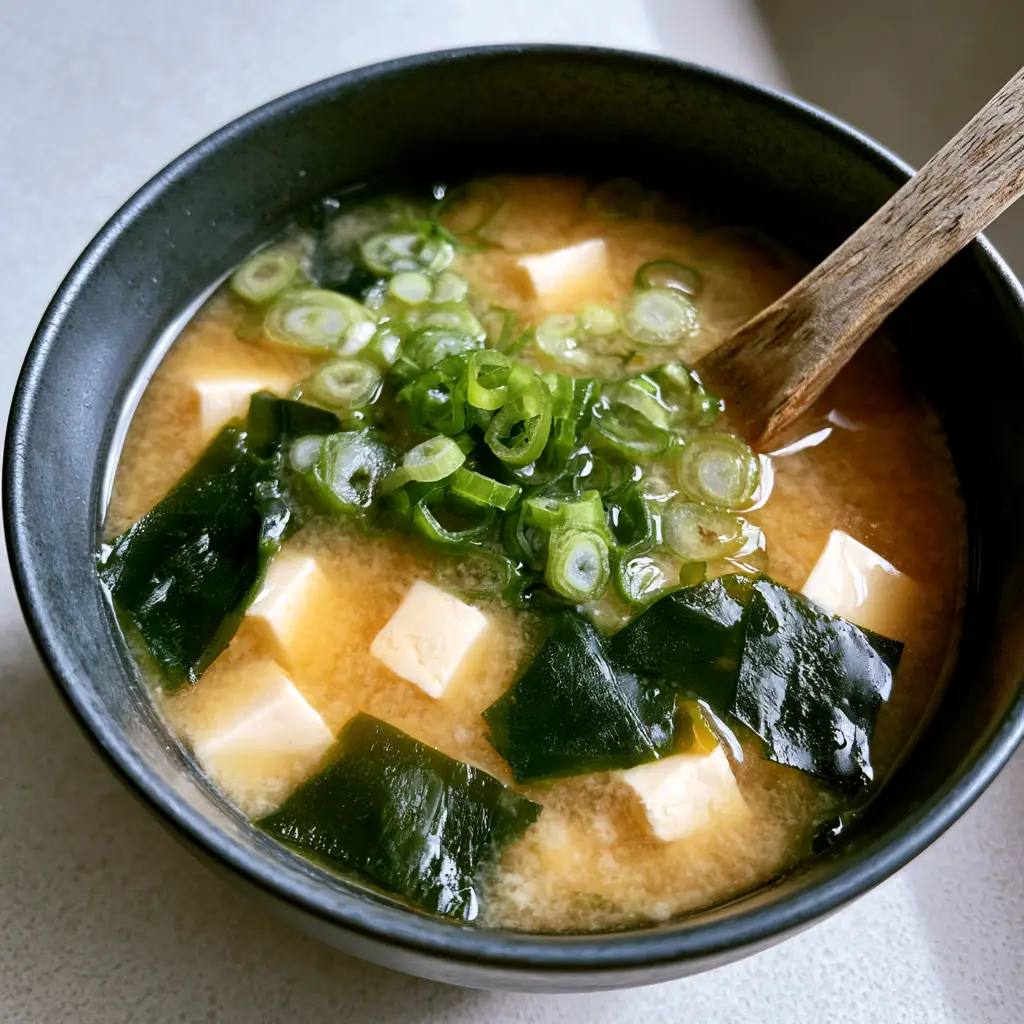
Step-by-Step Instructions for the Ultimate Miso Soup Recipe
Step 1: Preparing the Dashi Base
In a medium saucepan, bring 4 cups (950ml) of water to a gentle simmer. Add your dashi granules or your homemade kombu stock. The water should transform into a clear, slightly golden liquid. Avoid a rolling boil, as this can make the broth bitter. The aroma should be mildly smoky and salty.
Step 2: Rehydrating the Wakame
Add 2 tablespoons (around 10g) of dried wakame seaweed directly into the simmering dashi. Watch closely as the seaweed absorbs the liquid, unfurling into large, tender, dark green ribbons. This process takes about 2 minutes. This is a great time to prep a side dish like creamy-chicken-and-wild-rice-soup if you are meal prepping for the week.
Step 3: Integrating the Silken Tofu
Carefully slide 1/2 cup (125g) of cubed white silken tofu into the pot. You want uniform cubes, roughly 1/2 inch in size. Because silken tofu is fragile, do not stir vigorously. Let the cubes warm through for 2-3 minutes until they begin to bob slightly near the surface of the golden-brown broth.
Step 4: The Miso Slurry (The Golden Rule)
Crucial Culinary Tip: Never add miso paste directly to a boiling pot! It will clump and the high heat will destroy the healthy probiotics. Instead, place 3 tablespoons (45ml) of miso paste into a small bowl. Ladle about 1/2 cup of the warm dashi into the bowl and whisk until smooth. Pour this “slurry” back into the pot and turn off the heat immediately.
Step 5: The Final Flourish
Ladle the soup into a dark matte ceramic bowl to make the colors pop. Top with a generous scattering of thinly sliced, bright green scallion rings. Serve immediately with a rustic light-wood spoon for the most authentic experience. This soup pairs beautifully with a hearty main like lasagna-soup if you’re doing a multi-course “soup night.”
Expert Tips for Miso Success
- Don’t Boil the Miso: I will say it again—boiling kills the flavor and the nutritional benefits. Add it last!
- Sieve for Smoothness: If you want an ultra-refined broth, push your miso slurry through a fine-mesh sieve into the pot to catch any undissolved fermented soy bits.
- Storage: Miso soup is best enjoyed fresh. However, it can be kept in the fridge for up to 2 days. Reheat it very gently on the stovetop—do not let it reach a boil.
- Freshness Matters: Ensure your scallions are crisp and bright green. Dull, wilted scallions will ruin the visual appeal of the golden-brown dashi.
What to Serve With This Miso Soup Recipe
This soup is incredibly versatile. It serves as a light, cleansing start to a heavy meal or a functional snack. In Japan, it is often served alongside steamed white rice and grilled fish. If you are looking for a more Americanized comfort meal, try it alongside a fresh salad with a side of roasted-brussels-sprouts.
Frequently Asked Questions
No, you should never boil miso soup once the miso paste has been added. Boiling destroys the beneficial probiotics and can make the flavor of the miso turn bitter and flat.
You can use vegetable broth or water, but you will miss the authentic umami depth. If you don’t have dashi, add a little extra soy sauce or a pinch of mushroom powder.
It is best served fresh, but you can store it in an airtight container in the fridge for up to 2 days. Reheat gently without bringing it to a boil.
Miso paste is usually made from soy, but some varieties use grains like barley or rye that contain gluten. Always check the label to ensure it is 100% soy or rice-based if you are gluten-sensitive.
For an authentic golden-brown broth, use Awase miso (a blend) or Yellow miso. White miso is milder, while Red miso is much stronger and saltier.
The Complete Miso Soup Recipe
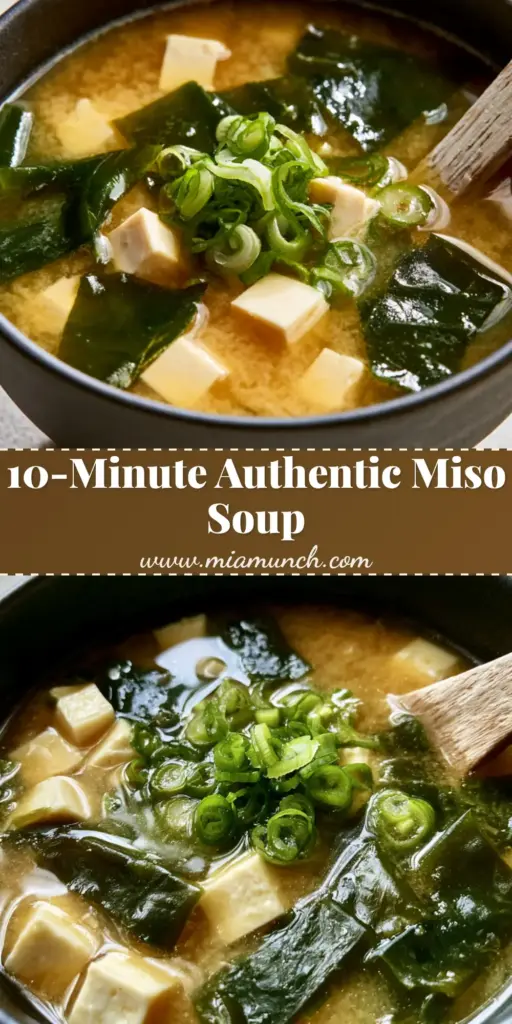
Miso Soup Recipe: Authentic Japanese Comfort in 15 Minutes
Ingredients
Equipment
Method
- In a saucepan, bring the dashi stock to a gentle simmer over medium heat. Do not let it reach a rolling boil.
- Add the dried wakame to the pot. Simmer for 2 minutes until it unfurls into tender dark green ribbons.
- Gently slide the silken tofu cubes into the broth. Cook for 2 minutes until warmed through.
- In a small bowl, whisk miso paste with a ladle of warm broth until smooth. Turn off heat and stir the slurry into the pot.
- Ladle into bowls and top with fresh green scallion rings. Serve immediately.
Notes
Use silken tofu for the most authentic, smooth texture.
Save This Recipe to Pinterest!
If you loved this Miso Soup Recipe, don’t forget to save it to your “Healthy Recipes” or “Japanese Food” board on Pinterest! Following mia_munch helps me continue to share these detailed culinary guides with you. I would love to see your creations—take a handheld smartphone photo of your bowl and share it in the comments below! Don’t forget to leave a 5-star rating if this soup hit the spot.